CSIT_Labs
Wilcoxon Matched pair signed rank test
Small sample (n < 25)
Steps
for example of data set:
Use Wilcoxon Matched pair signed rank test to determine the equality of effectiveness of two types of drugs in suppressing pair from following data
| Patient No. | Drug A | Drug B |
|---|---|---|
| 1 | 6.5 | 3.5 |
| 2 | 3.7 | 3.7 |
| 3 | 3.9 | 4.7 |
| 4 | 6.7 | 5.0 |
| 5 | 6.2 | 5.6 |
| 6 | 6.7 | 4.3 |
| 7 | 6.1 | 5.4 |
| 8 | 4.3 | 5.8 |
| 9 | 5.5 | 4.3 |
| 10 | 6.8 | 4.3 |
| 11 | 5.4 | 5.4 |
| 12 | 4.0 | 4.1 |
| 13 | 5.7 | 4.1 |
| 14 | 3.9 | 4.2 |
| 15 | 3.6 | 3.7 |
| 16 | 4.9 | 4.1 |
| 17 | 3.9 | 5.4 |
| 18 | 5.8 | 3.7 |
| 19 | 4.9 | 4.1 |
| 20 | 4.9 | 4.1 |
-
Goto variable view and add the variables

-
Goto the data view and add the data
-
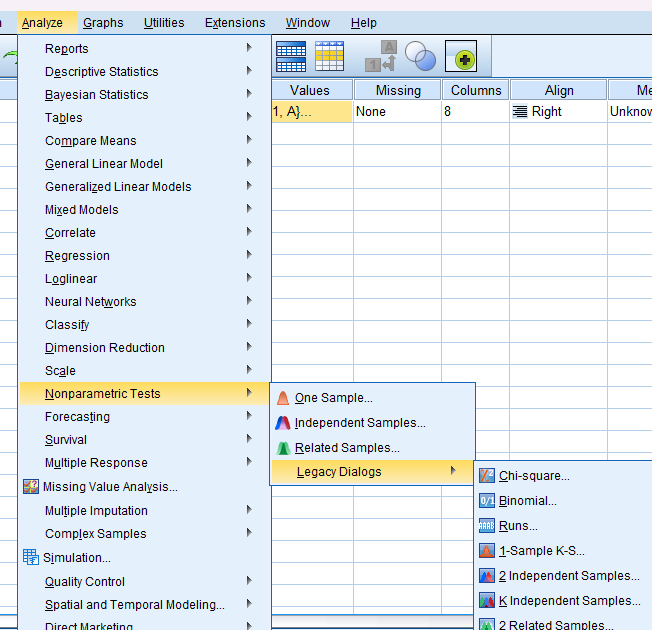
Click on Analyze tab > NonParametric Tests > Legacy Dialogs > 2 Related Samples.
-
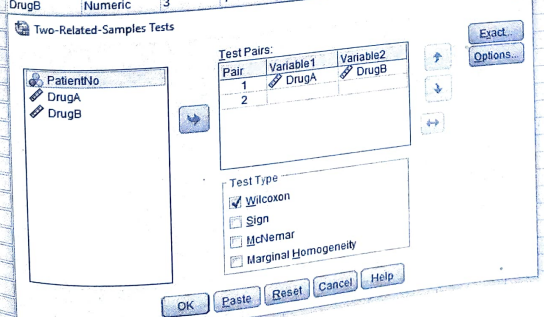
Add the required variable in Test Variable List and click Options.
-
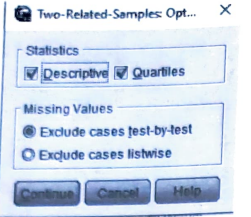
Click Descriptives and Quartiles and click Continue.
-
Required Output:
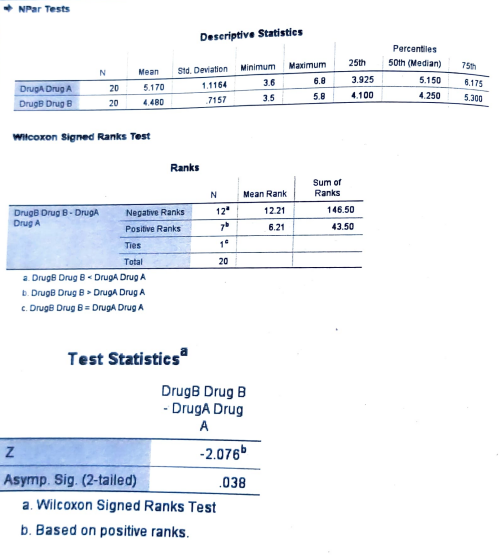
Since, p < 0.05, it is significant.